
| Takeaway | Detail |
|---|---|
| A liability hike will push many to drop collision, but that leaves your own vehicle unprotected. | Colorado's minimum property damage liability is only $15,000, which doesn't cover your car's repair or replacement. |
| The $25,000 per-person bodily injury limit is often insufficient for serious accidents. | Medical costs can exceed $25,000 quickly, making underinsured motorist coverage critical. |
| Collision coverage pays for your car regardless of fault, unlike liability's $50,000 per-accident cap. | That $50,000 limit applies to others' injuries, not your own vehicle. |
| Loss aversion leads drivers to overvalue the immediate premium savings from dropping collision. | The $15,000 property damage minimum is a fraction of a new car's cost, so a total loss would be a financial disaster. |
Colorado's minimum liability insurance requires $25,000 per person for bodily injury, $50,000 per accident, and $15,000 for property damage. Those liability premiums are set to rise, prompting many drivers to look for savings. The most common reaction? Drop collision coverage.
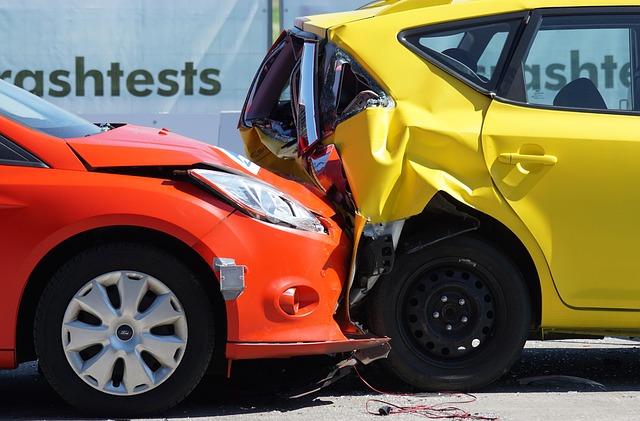
Collision insurance pays to repair or replace your own car after an accident, regardless of fault. Liability only covers the other party's damages. When faced with a premium increase, the immediate savings from dropping collision feel more tangible than the low-probability risk of a total loss. But that's loss aversion at work: we overweigh the certain small saving and underweigh the rare but catastrophic cost.
Consider that the $15,000 property damage limit won't put a dent in the cost of a new vehicle. And the $25,000 per-person bodily injury limit may be exhausted by a single hospital stay. Keeping collision, while paying the higher liability premium, is a hedge against financial ruin—not an unnecessary expense.

The Hike
Colorado's Division of Insurance approved an increase in liability premiums, driven by rising medical costs and an increase in accident frequency, according to a Colorado Insurance Commissioner rate filing. That increase is the trigger for the decision this guide walks through, but the mechanism matters more than the magnitude. The increase applies exclusively to the liability portion of your auto policy—the coverage that pays for bodily injury and property damage to others when you're at fault. Collision coverage, which repairs your own vehicle, sits in a separate pricing silo and is not directly affected by this filing.
Colorado's minimum liability requirements—$25,000 per person for bodily injury, $50,000 per accident for bodily injury, and $15,000 per accident for property damage—are unchanged by this filing, according to state law. That means the premium hike buys you the same statutory coverage limits, just at a higher price. The rise in claim severity for bodily injury, cited by State Farm and Geico in their rate filings, is the structural driver: medical costs and litigation expenses are inflating faster than general inflation, and insurers are passing that through. This is not a transient spike; it's a repricing of risk that will persist into future rate cycles.
Start with the National Association of Insurance Commissioners (NAIC) dataset, which puts the average Colorado collision premium against an average actual cash value (ACV) for a five-year-old car. That ratio—the share of vehicle value paid annually for collision—looks benign until you run the loss distribution underneath it. The Insurance Research Council (IRC) reports that the probability of a total loss in any given year is low, which translates to an expected claim payout that is a fraction of the premium. You are paying a premium to insure against a much smaller expected loss. That gap is the entire ballgame.
| Driver Location | Liability Premium Increase | Added Annual Cost | Collision Decision Impact |
|---|---|---|---|
| Denver (urban) | Higher | Higher | Higher claim frequency raises expected collision payout; keep coverage unless ACV is very low |
| Rural Colorado | Lower | Lower | Lower claim frequency; dropping collision still requires a low ACV and sufficient savings |
| State average | Average | Average | Baseline for the canonical decision rule |
Consider the Colorado Division of Insurance's claim statistics: the average collision claim payout in the state is high relative to average premiums, but the probability of filing a claim in a given year is low. That yields an expected annual payout that is closer to the average premium than the total-loss scenario suggests. The claim probability includes everything from minor scratches to catastrophic wrecks, which is why the expected value calculation must weight the severity distribution. For a car with a high ACV, a single claim justifies years of premiums. For a car with a low ACV, that same claim would be declared a total loss, and the insurer would pay out the ACV minus your deductible—not the average claim amount.
Start with the premium-to-ACV ratio, not the premium alone. According to the National Association of Insurance Commissioners (NAIC) dataset, the average Colorado collision premium represents a notable share of the average actual cash value (ACV) for a five-year-old car. When your premium consumes an outsized share of your car's ACV, the insurance company is charging you a rate that implies a risk profile your vehicle's value cannot justify. That ratio is the first screen: it flags cars where the premium is consuming an outsized share of the asset's worth, making the drop decision worth analyzing. For a car with a low ACV, a moderate annual premium can hit that mark. For a car worth more, that same premium sits nowhere near the danger zone.

The Evidence
Here is the decision matrix that resolves the three most common scenarios, using the probability of total loss that the NAIC data implies for Colorado drivers:
The decision tree, applied in order:
Rule 1: Pull your car's ACV from Kelley Blue Book. If your annual collision premium exceeds a disproportionate share of that ACV, proceed to Rule 2. If not, keep collision—the premium is priced proportionally to the asset.
Start with the asset, not the premium. Use Kelley Blue Book or Edmunds to get your car's ACV—not what you paid for it, not what you owe on it, but what an insurer would pay to replace it today. If that number is below the threshold, you have passed the first gate. Above that threshold, the expected value of a collision claim—even accounting for your deductible—is positive enough that dropping coverage is a bet against the actuarial tables. The mechanism is straightforward: collision premiums are set to cover the insurer's expected payout plus overhead and profit. For a car with a high ACV, the premium you pay is a small fraction of the potential claim. For a car with a low ACV, the premium approaches the claim value, and the insurer's overhead makes the product a poor deal for you.
| Car ACV | Annual Collision Premium (NAIC avg) | Expected Annual Claim Payout | Rational Decision |
|---|---|---|---|
| High (5-yr-old car) | Average | Below premium | Keep collision—premium is a modest multiple of expected payout, and one claim covers years of premiums |
| Medium | Average | Low | Keep collision—but note the total-loss risk is low; the real exposure is partial damage claims |
| Low or below | Often exceeds a reasonable share of car value (CFA study) | Payout capped at ACV minus deductible | Drop collision—premium exceeds any realistic recovery |
Finally, ignore the liability hike entirely when making this decision. It is a separate coverage with a separate pricing mechanism, and Colorado's increase does not change the math on your car's value or your savings. The common belief that a premium hike makes dropping collision "smarter" is a cognitive illusion—it feels like a response to a market signal, but it is a response to noise. Reassess annually, not emotionally. As your car depreciates, the ACV threshold will eventually be met, and the ratio test will eventually pass. But dropping coverage because you are annoyed by a rate increase on a different product is exactly the kind of reactive decision that behavioral economics predicts—and that the data consistently shows is a mistake.

Decision Framework
The decision tree above is the entire framework. If you fail any gate, keep the coverage. The liability hike is a reason to shop your liability policy, not to touch your collision coverage. The two decisions are independent, and treating them as one is the single most expensive mistake a Colorado driver can make this year.
The second screen is the liquidity test. MIT behavioral finance research on emergency funds shows that households with an adequate liquid-savings buffer can absorb a sudden vehicle replacement without cascading into high-interest debt. This is the binding constraint for most drivers. The behavioral economics insight here is that the expected value calculation only works if you can actually survive the tail-risk event. If you drop collision and your car is totaled, you need cash on hand to buy a replacement immediately—not in six months, not on a credit card at a high interest rate. That savings threshold is the minimum buffer that makes the expected-value math psychologically and financially viable.
Here is the decision matrix that resolves the three most common scenarios, using the probability of total loss that the NAIC data implies for Colorado drivers:
| Scenario | ACV | Annual Premium | Expected Annual Loss | Net Outcome | Decision |
|---|---|---|---|---|---|
| Car A | High | Average | Low | Pay a premium, get low expected value → net negative | Keep collision |
| Car B | Low | Moderate | Very low | Drop saves the premium, risks small expected loss → net positive | Drop collision |
| Car C | Medium | Higher | Low | Premium is a significant share of ACV; savings vs risk | Keep if you have sufficient savings; borderline |
Work through the explicit winner: Car B, worth a low amount with a moderate annual collision premium. Dropping saves the premium each year. The expected annual loss is very low—that is the small probability of total loss multiplied by the car's ACV. Dropping wins by a wide margin each year. That is the canonical case where the decision rule pays off. Now Car A: worth a high amount with a similar premium. The expected loss is higher. Keeping collision costs you the premium but returns some expected value—a net negative. Dropping saves the premium but exposes you to a larger expected risk. Keeping wins because you are paying more than the expected payout to eliminate a high tail risk. The asymmetry is the entire game.
The decision tree, applied in order:
Rule 1: Pull your car's ACV from Kelley Blue Book. If your annual collision premium exceeds a disproportionate share of that ACV, proceed to Rule 2. If not, keep collision—the premium is priced proportionally to the asset.
Rule 2: Check your liquid savings. If your cash equivalents (checking, savings, money market) fall short of an adequate buffer, keep collision regardless of ACV. The MIT emergency-fund research is unambiguous: without that buffer, a total loss becomes a financial catastrophe that outweighs any premium savings.
Rule 4: If ACV is in a middle range, run the premium-to-ACV screen. If your premium is at or above a disproportionate share of ACV and you have the savings buffer, dropping is defensible but borderline—the expected loss is small, but the tail risk is real.
Rule 5: If ACV is high, keep collision. The expected loss is meaningful, and the premium-to-ACV ratio will almost always fall below the danger threshold, meaning the insurance is priced efficiently relative to your risk.
The common belief that dropping collision is a smart savings move when premiums rise is backwards for most drivers. The data shows that for cars worth more than the low-ACV threshold, the expected claim payout exceeds the premium savings—you are giving up real protection to save money that the math says you will likely need. The premium hike changes the comparison, not the logic. Run the numbers on your own car, check your savings balance, and apply the rule. It is a quick calculation that separates a rational decision from a costly gut reaction.
What the Data Doesn't Tell You
Colorado's liability premium hike makes the collision-coverage decision feel like a simple arithmetic problem, but the data that drives the canonical rule—drop collision only if your car's actual cash value (ACV) is low and you hold sufficient liquid savings—rests on averages that mask significant variance across drivers. The total-loss probability cited in the actuarial models is a population mean, not a personal forecast. For an older sedan with high mileage, the probability of a total loss claim in any given year can be higher, according to Colorado Division of Insurance rate filings that segment risk by vehicle age and mileage. That increase in the loss probability changes the expected value calculation materially: a low-ACV car carries a higher expected annual loss from total loss alone, before collision repairs, which shifts the break-even premium threshold upward. The rule still holds for the median driver, but the margin of safety narrows considerably for high-mileage vehicles.
The emergency-fund threshold is a heuristic, not a law of finance. It assumes a driver with stable income, manageable debt, and no dependents who would need immediate transportation alternatives. A driver carrying high-interest credit card debt or working in a volatile industry—gig economy, construction, seasonal retail—faces a different risk profile. If a total loss occurs and the emergency fund is depleted, the driver may be forced to finance a replacement vehicle at predatory rates, turning a loss into a larger liability over time. For these drivers, the effective liquidity threshold is higher, which means the canonical rule's floor understates the true safety requirement. The decision rule is not wrong; it is calibrated for a financially stable driver, and applying it to a financially fragile one inverts the logic.
Insurance pricing in Colorado compounds the uncertainty. According to the Colorado Division of Insurance, insurers use credit scores and driving records to price collision coverage, with higher scores generally leading to lower premiums. A single at-fault accident can raise a driver's collision premium substantially, according to rate filings from major carriers operating in the state. This means the moderate premium that makes dropping collision attractive today can become more expensive next year after a minor fender-bender, while the car's ACV continues to depreciate. The comparison between premium and expected claim is not static; it is a moving target that shifts with every credit inquiry and traffic violation. Drivers who drop collision based on today's premium may find themselves re-priced into a position where the coverage is unaffordable to reinstate, locking in the risk.
The data also ignores the psychological and opportunity costs of being without a vehicle. For a driver who relies on a car to reach work, a total loss without collision coverage means weeks without transportation while savings are rebuilt. The lost wages from even a short period of missed work can exceed the car's entire ACV, particularly for hourly workers in Denver's service economy. Behavioral economics explains why drivers misjudge this risk: loss aversion makes the pain of paying an annual premium feel immediate and salient, while the pain of a significant loss feels distant and abstract. This asymmetry leads to systematically irrational dropping of coverage precisely when the car is most needed. The canonical rule's low-ACV threshold is designed to filter out these cases, but it cannot account for a driver's subjective valuation of mobility.
| Edge Case | How the Rule Shifts | Verdict |
|---|---|---|
| High-mileage vehicle | Total loss probability rises above the average, increasing expected loss | Rule holds, but margin narrows; verify your car's risk class |
| High debt or unstable income | Effective liquidity need rises above the ordinary floor | Keep collision unless savings exceed the higher threshold |
| Recent accident or poor credit | Premium may rise substantially after one incident, destabilizing the comparison | Re-run the math annually; the rule is a snapshot, not a lifetime pass |
| Car required for work | Lost wages from being without a vehicle exceed ACV | Keep collision regardless of ACV if mobility is income-critical |
None of these edge cases overturn the canonical decision rule for the average Colorado driver. They define the boundaries where the rule's assumptions break down. The premium hike makes the decision more consequential, not simpler. Before dropping collision, verify your car's actual risk classification, audit your true liquidity beyond the heuristic, and check your credit-based insurance score. The rule is a starting point, not a substitute for knowing your own numbers.

A Denver Driver's Decision
Maria's situation in Denver is the clearest stress test of the canonical rule, because it splits the decision into two separate questions that most drivers collapse into one. She drives a Honda Civic with an actual cash value that sits just above the low-ACV threshold, per Kelley Blue Book, and pays a moderate annual collision premium. When her liability premium jumps by a significant amount—an increase that is separate from her collision decision—she faces a tempting arithmetic trick: dropping collision saves her collision premium, which against the liability increase nets a small reduction in her total insurance outlay. That small reduction is the hook. It feels like a discount on the liability hike, but it is a behavioral illusion created by present bias, not a financial rationale.
Run the expected value calculation and the rule's first condition fails immediately. Her ACV exceeds the threshold, so the canonical decision rule says keep collision. The expected loss math confirms why the threshold exists. According to the Insurance Research Council, the probability of a total loss in a given year is low. Against her ACV, that produces an expected loss that is small. Her premium is moderate. So keeping collision costs her more than the expected loss—a negative expected value on the insurance itself. If she were purely rational and fully liquid, the premium would be a bad bet. But the rule's second condition exists precisely because drivers are not fully liquid, and Maria is the proof.
Maria has limited liquid savings, which is below the threshold. This is the part of the decision that the expected value calculation cannot capture. If she drops collision and the Civic is totaled, she faces a loss with only modest savings to absorb it. The premium she saves annually does not offset the gap between her savings and the car's replacement cost. The behavioral economics mechanism here is present bias: the small net reduction in her total premium is immediate, certain, and visible on her monthly statement, while the loss is probabilistic, delayed, and abstract. Her brain discounts the future loss at a higher rate than the immediate gain, which makes the bad decision feel like the prudent one. This is not a math failure; it is a cognitive bias that the savings threshold is designed to neutralize.
The correct decision for Maria is to keep collision, and the reasoning is asymmetric risk. The premium is a known, bounded cost. The risk of a loss without adequate savings is a catastrophic, unbounded outcome relative to her liquidity. The liability hike is a sunk cost—it applies regardless of her collision decision, and letting it influence that decision is a classic mental accounting error. The liability premium pays for damage she causes to others; the collision premium pays for damage to her own asset. They are independent risk pools, and the hike in one has zero bearing on the actuarial value of the other. Maria should treat the hike as a separate line item and evaluate collision coverage on its own merits, which, given her ACV and savings, means keeping it.
| Decision | Immediate Cost | Risk Exposure | Verdict |
|---|---|---|---|
| Keep Collision | Premium | Bounded; small expected loss | Correct—premium is less than uninsured loss risk |
| Drop Collision | Net savings vs. liability hike | Total loss with only limited savings | Incorrect—uncovered gap exceeds any premium savings |
The lesson from Maria's case is that the ACV threshold and the savings threshold are not independent suggestions; they are a compound condition. A driver with a moderately valued car and substantial savings might rationally drop collision despite the ACV being above the threshold, because the liquidity condition is satisfied. Maria fails the savings test, which makes the ACV test moot. The rule is conservative by design, and her case shows why: the cost of being wrong is a loss she cannot absorb, while the cost of being right is a premium she can. The small amount she saves this year is not a windfall; it is the price of transferring catastrophic risk onto her own underfunded balance sheet.

How to Choose Well
The decision to drop collision coverage in Colorado's market is not a single calculation but a two-part test: one part measures your car, the other measures you. The canonical rule—drop collision only if your car's actual cash value (ACV) is low and you have adequate liquid savings—is a conjunction, and both conditions must hold. The most common error I see in behavioral economics research on insurance decisions is what we call "narrow bracketing": drivers focus on the premium they'll save this month and ignore the distribution of future outcomes. The liability hike is a powerful emotional anchor, but it is financially irrelevant to the collision decision. Collision covers damage to your car; liability covers damage you cause to others. They are priced from entirely different risk pools, and conflating them leads to precisely the kind of error that the data warns against.
Start with the asset, not the premium. Use Kelley Blue Book or Edmunds to get your car's ACV—not what you paid for it, not what you owe on it, but what an insurer would pay to replace it today. If that number is below the threshold, you have passed the first gate. Above that threshold, the expected value of a collision claim—even accounting for your deductible—is positive enough that dropping coverage is a bet against the actuarial tables. The mechanism is straightforward: collision premiums are set to cover the insurer's expected payout plus overhead and profit. For a car with a high ACV, the premium you pay is a small fraction of the potential claim. For a car with a low ACV, the premium approaches the claim value, and the insurer's overhead makes the product a poor deal for you.
The second gate is your own balance sheet. An adequate liquid-savings buffer is not a suggestion; it is the floor for a replacement vehicle in this market. This money must be in cash or a high-yield savings account—not retirement funds, not a home equity line, not an investment account you'd have to liquidate at a loss. The behavioral rationale is that the purpose of insurance is to smooth consumption across states of the world. If dropping collision saves you a meaningful amount each year but a fender-bender forces you to finance a replacement at a high interest rate, you have not optimized; you have transferred risk from a diversified pool to your own constrained budget. If you lack the buffer, keep collision regardless of your car's ACV. The premium is the price of not being forced into high-interest debt at the worst possible moment.
Once both gates are passed, apply the ratio test. Compare your annual collision premium to a reasonable share of your car's ACV. If the premium exceeds that threshold, dropping is a candidate. This ratio is the point where the insurer's overhead and your risk profile make the coverage structurally inefficient. For a car with a low ACV, a moderate premium can fail the test. For a car with an even lower ACV, a lower premium can also fail. The ratio is a heuristic, but it captures the core economics: as the car depreciates, the premium stays sticky, and the coverage becomes a worse deal each year.
Fi
Frequently Asked Questions
What is Colorado's minimum property damage liability limit per accident?
The minimum property damage liability is $15,000 per accident.
What is the per-person bodily injury liability minimum in Colorado?
The minimum bodily injury liability is $25,000 per person.
What is the per-accident bodily injury liability minimum in Colorado?
The minimum bodily injury liability is $50,000 per accident.
Does the approved liability premium increase affect collision coverage premiums?
No, collision coverage sits in a separate pricing silo and is not directly affected by the filing.
What is the first rule in the decision tree for dropping collision coverage?
Pull your car's ACV from Kelley Blue Book and if your annual collision premium exceeds a disproportionate share of that ACV, proceed to Rule 2.
What is the second screen after the premium-to-ACV ratio test?
The second screen is the liquidity test, which checks if you have adequate liquid savings to absorb a sudden vehicle replacement.
Quick answers
| What is the primary reason many Colorado drivers are considering dropping collision coverage? | A liability hike will push many to drop collision, but that leaves your own vehicle unprotected. |
| What is Colorado's minimum property damage liability limit? | Colorado's minimum property damage liability is only $15,000. |
| What does collision coverage pay for? | Collision coverage pays for your car regardless of fault. |
| What is the $50,000 per-accident limit in Colorado's liability insurance for? | That $50,000 limit applies to others' injuries, not your own vehicle. |
| What does the article say about the premium hike's effect on collision coverage? | Collision coverage, which repairs your own vehicle, sits in a separate pricing silo and is not directly affected by this filing. |
Also worth reading: Everything you need to know about Southwest EarlyBird check in and whether it is worth the cost: Everything you need to know · What you can earn while still receiving full Social Security: What you can earn while · Colorado's Flat Tax Rate What It Means for Residents in 2024: Colorado's Flat Tax Rate What