
| Takeaway | Detail |
|---|---|
| A commission-free ticket is only a salience cue | The visible commission-free label says nothing by itself about bid-ask spread, market impact, or the difference between an ETF's market price and net asset value. |
| Order frequency drives repeated friction | When each visible ticket is commission-free, annual order count determines how often noncommission friction can be incurred. |
| Commission-free offers require conditions | BMO advertises commission-free stock and ETF trades, but the supplied excerpt omits eligibility, geography, effective date, and exceptions to the commission-free offer. |
| Manager fees are not an investor-cost estimate | The commission-free investor-ticket narrative cannot absorb Yahoo Finance's reported practice because its excerpt names no broker, manager, fund, or representative and provides no data for an investor-level calculation. |
The commission-free label is the most prominent feature on an ETF trade ticket, but it poorly describes the cost of getting in and out. An investor can see no commission and still face the bid-ask spread, the consequences of trading size, and the difference between an ETF's market price and net asset value. Such frictions may look small on an execution while accumulating as orders repeat throughout the year.
Yahoo Finance's supplied headline says U.S. brokers may charge a fee from ETF managers as commission-free trading takes a toll. Yet the excerpt names no broker, manager, fund, or representative and supplies no annual volume, portfolio value, or turnover rate. It also shows no visible date tying the practice to the target year. Those omissions block any investor-level cost estimate from the reported claim.
BMO's cited newsroom title advertises commission-free stock and ETF trades, but the excerpt omits eligibility, geography, effective date, and exceptions. A commission-free label should therefore be treated as a salience cue, not a full-cost verdict. Compare annual order count, spread paid, market impact, price-to-NAV deviation, and account restrictions. This year's winner is not the platform with the most seductive ticket; it is the one that makes total implementation cost clearest under realistic use.

Why a Commission-Free ETF Ticket Does Not Establish Full Cost
A commission-free ETF ticket is a display convention, not a complete execution-cost statement. The relevant question is not whether the ticket carries a commission-free label; it is whether the broker can support the realized fill and whether the investment strategy’s complete annual cost is fully observed. A reasonable-basis, best-interest framing does not collapse those distinctions.
A market buy begins with the offer as its price reference, while a market sale begins with the bid. Crossing those sides incurs the entry and exit half-spreads. Market impact and applicable exchange, routing, ADR, stock-borrow, or other transaction charges can add more, producing an all-in round-trip cost despite a commission-free display. According to Charles Schwab, exchange-process, ADR, and stock-borrow fees can still apply. The supplied source set does not quantify ETF spreads, market impact, or such charges, so an execution estimate must come from the applicable quote and order terms rather than brokerage marketing.
A reasonable-basis, best-interest framing requires a basis for believing a customer transaction serves the customer’s interest. That obligation is not a midpoint-fill guarantee. It does not convert a market order into an execution at the midpoint of the bid and offer. Order type and routing determine the realized price, and only the execution record—not the commission label—establishes what the implementation actually cost.
Market liquidity and account churn must also be separated. Rising industry-wide ETF volume can improve quote formation and lower unit execution costs, but it does not reduce the number or size of exposure changes made by an individual strategy. That strategy’s own order flow drives its implementation shortfall. Extra ETF orders are not free, and increased turnover cannot be presumed to improve returns merely because more shares trade across the market.
The behavioral-design risk is the prominent commission-free label itself. It acts as a cue that trading is costless, while automated contribution and rebalancing defaults can make extra orders feel harmless by foregrounding ticket price while obscuring recurring spread and impact. The interface should place observed annualized all-in cost directly beside the commission-free label and show expected round trips. Compare the implementation’s complete annual drag under realistic use. When lower annual turnover produces a lower observed total cost, it is the lower-cost path.
A commission-free label also creates a behavioral-accounting trap: it makes the absence of a separately displayed brokerage fee conspicuous while leaving spread, market impact, taxes, and tracking difference outside the salient account. Thus, “commission-free” cannot mean an extra ETF buy and sell is free, and the claim that more frequent trading can only improve returns fails. A commission-free ticket represents total cost only if every omitted component is absent—something the supplied source set does not establish.
| Decision input | Ledger basis | Explicit verdict |
|---|---|---|
| Displayed commission | Commission-free claim without a supplied dollar schedule | Wins only the commission component, not necessarily total cost. |
| One-way cost conversion | Observed one-way implementation shortfall | The actual execution cost defeats a commission-only comparison. |
| Full sale and restoration | Completed sale and restoration | Apply the all-in cost to the completed cycle. |
| Partial trim | Fractional round-trip equivalent | Scale the observed round-trip cost by the fraction traded. |
| Distribution reinvestment | New purchase event | Add its own spread and possible impact. |
| Annual ETF decision | Expense ratio + round-trip cost + tax + tracking difference + other transaction charges | Use the commission-free ETF only if its complete expected cost is lower; otherwise choose lower annual turnover or implementation cost. |

Why ETF Growth Does Not Cancel Trading Friction
Tax is a realization term, not a charge on market value. Each taxable ETF sale can be a potentially material realization event, but no federal bill is automatic: gain, holding period, taxable income, and losses determine the outcome. Put expected tax—not a blanket rate applied to assets—into the same annual horizon as the other terms. Spread and market impact remain order-specific; neither worldwide assets nor net flows supplies their values for a particular trade.
The practical filter is therefore a unit check: assets under management describe market size; net flows describe market activity; an expense ratio describes holding; tax rules describe realization. An expense-ratio example captures only expense, not the annual all-in comparison. Use the commission-free ETF only when its complete expected cost is lower than the alternatives. If expected drag is higher, lower annual turnover—or the lower-cost implementation when turnover is comparable—wins.
An implementation that completes no round trips avoids the execution cost of a completed sale-and-restoration cycle. The supplied source set provides neither an investor portfolio value nor an annual holding-cost example, so it cannot establish a normalized annual position cost. A commission field describes an order; it does not certify that complete position management was costless.
The supplied source set does not provide an ETF expense ratio or a numeric all-in execution cost for a completed round trip. Those inputs must be measured rather than assumed. A completed round trip means a full sale followed by restoring the position—not an individual buy or sell ticket. These distinctions are framework definitions, not empirical ETF-cost claims.
Completed round trips can add execution cost, while the fund's holding cost must be considered separately. The behavioral trap is salience: a commission-free display can crowd out less conspicuous spread, market impact, taxes, and tracking difference. A commission-free ticket therefore does not make an incremental buy-and-sell cycle free.
Before applying this framework to a real account, replace every illustrative assumption with the selected fund’s measured fee, realized fills, taxes, and tracking difference. Reconstruct each completed round trip from actual fills, retain the annual expense and tax charges, add the measured tracking difference, and compare the resulting total with the alternatives. Do not carry illustrative assumptions into the account automatically. ClearEdge Automation’s supplied comparison concerns futures brokers rather than ETFs, while the Yahoo Finance excerpt has no visible publication date establishing a 2026 origin; neither can substantiate an illustrative ETF execution assumption.
| Implementation choice | Relevant sourced figure | Winner under the decision rule |
|---|---|---|
| Commission-free implementation using a selected ETF | The supplied source set provides no ETF expense ratio or portfolio-value example; the selected fund's current fee schedule and actual position must be checked. | Eligible only if its complete observed annual cost is lower than the alternatives. |
| Tax-sensitive alternative | The supplied source set provides no numeric tax-rate schedule. Gain, holding period, taxable income, and losses determine the outcome. | Wins when its complete observed annual cost is lower; if turnover is equal, the lower all-in cost wins. |

Observed-Cost Test
The rule is an expected-cost comparison, not a promise that every ETF round trip is free. A prominent commission-free label is a salience cue, not a cost estimate: it reveals nothing by itself about the fill, spread, taxes, or tracking outcome. Where those observations are missing, the result is indeterminate—not a presumption in favor of more trading.
Small accounts expose the first caveat. Fidelity states that commission-free trades remain available, although its snippet provides no ETF-specific schedule or amount. If a broker’s fixed per-order charge is absent and each spread-based round trip is extremely small, a higher-turnover implementation can remain cheaper than an alternative carrying an actual order fee. That exception must be evaluated from observed account data rather than the commission label. Account size, the alternative’s actual fee, and spread cost must be observed. What this disproves is the belief that “commission-free” makes an additional buy and sell free.
| Implementation | Completed round trips | Annual expense | Execution drag | Tax and tracking difference | Total annual drag | Commission display | Decision |
|---|---|---|---|---|---|---|---|
| Continue holding | None | Selected fund's observed annual expense | No completed sale-and-restoration cycle | Observed net incremental tax and tracking difference | Observed holding cost | Commission-free display, subject to applicable terms | Winner if it has the lowest observed total cost |
| Fully sell and restore repeatedly | Repeated completed cycles | Selected fund's observed annual expense | Observed all-in cost for each completed cycle | Observed net incremental tax and tracking difference | Observed annual expense plus execution, tax, and tracking difference | Commission-free display, subject to applicable terms | Compare with holding; repeated cycles can add cost |
| Higher-frequency sell-and-restore strategy | Repeated completed cycles | Selected fund's observed annual expense | Observed all-in cost for each completed cycle | Observed net incremental tax and tracking difference | Observed annual expense plus execution, tax, and tracking difference | Commission-free display, subject to applicable terms | Compare with every lower-turnover and lower-cost alternative |
Large orders break the spread shortcut in the other direction. When an order is large relative to displayed bid-ask depth, the displayed spread understates implementation shortfall because the order may consume the book and pay through successive quotes. Order size, volatility, and execution schedule can make two nominally identical round trips cost different amounts. Record realized shortfall, delayed or unfilled quantity, and the execution schedule; the screen spread alone is not an all-in cost.
Tax lots show why turnover cost need not be positive. A sale that realizes a loss and offsets a gain elsewhere can have a negative net tax contribution relative to the no-trade baseline, so applying a flat positive rate systematically overstates the incremental cost of taxable-account turnover. In the decision rule, “tax” must mean expected net incremental tax, including a usable loss benefit. The benefit changes a measured input; it neither waives the comparison nor turns an otherwise more expensive implementation into the winner.
Cross-market NAV creates a separate execution wedge. Investopedia’s “ETF Market Price vs. ETF Net Asset Value: What’s the Difference?” explicitly identifies market price and NAV as distinct ETF pricing concepts. When underlying securities are closed or fragmented, an ETF’s market price can differ materially from indicative NAV, and a limit order at the apparent spread may not fill. Quoted cost and executable cost have diverged. Use the price available under the intended schedule and account for nonfill risk rather than treating a displayed quote as an achieved transaction.

Counterevidence
Backtests add confidence they often do not deserve. Historical returns often assume midpoint fills, while event days, index changes, and fund mergers create costs that calm-period averages omit. No annual spread average guarantees the same execution result for a particular order. The supplied results contain no numeric 2026 ETF bid-ask spread or expense ratio, so they cannot establish a particular implementation’s all-in result. A backtest can stress-test assumptions; it cannot replace contemporaneous fills, tax records, and current cost inputs.
These caveats limit inference, not the hierarchy. If measured annual all-in drag is lower than that of the alternatives, the commission-free implementation remains eligible. If it is higher, the lower-turnover or lower-cost implementation wins. When a required input cannot be observed, mark the choice indeterminate rather than inventing precision.
The supplied source set does not expose a numeric bid-ask spread or net expense ratio for a dated ETF product page. It therefore cannot quantify the cost hidden by a commission-free ticket. Any worked case must identify its observation date and source, and a median quoted spread would not be a guaranteed execution fill: realized cost can differ as market conditions and execution quality change.
Use observed buy-side and sell-side fills to calculate a complete cycle. The supplied source set does not provide a position value, quoted spread, cycle count, expense ratio, or annual cost boundary, so it cannot support a dollar or percentage friction example. For a selected fund and program, enter measured values and do not treat a commission-free display as the total cost.
The behavioral error is treating commission as the whole cost of trading while overlooking the spread embedded in execution prices. A salient commission-free display can therefore make an unnecessary buy-and-sell cycle appear beneficial. With no documented portfolio benefit here, calendar-driven liquidation is not justified by the commission-free label; the actionable control is to document that benefit before approving another complete cycle.
For otherwise comparable U.S. ETF implementations, the fund choice follows from completed exposure restorations, not ticket count. Count the program before evaluating any commission schedule, then express every noncommission cost in the same annual unit. That common unit defeats the interface error of treating a salient commission-free label as evidence that more trading is free.
| Case | Record before choosing | Rule treatment |
| Small account | Actual alternative fee, account size, spread-based round-trip cost | Compare the actual alternatives |
| Large order | Realized shortfall, volatility, execution schedule | Do not use displayed spread alone |
| Tax lots | Net incremental tax, including loss offsets | Retain a valid negative tax contribution |
| Cross-market NAV | Executable price, nonfill risk, market-price versus NAV gap | Do not treat the quote as a fill |
| Backtest | Fill assumption and event-day execution record | Use for stress testing, not proof |
Build an execution map for the annual program. Classify every execution as an initial purchase, partial rebalance, full liquidation, or repurchase. A round trip is the complete sale and restoration of the same exposure. An initial purchase or one-sided partial rebalance is not a completed round trip; a liquidation followed by repurchase of the same exposure is one. This prevents ticket count from masquerading as turnover.
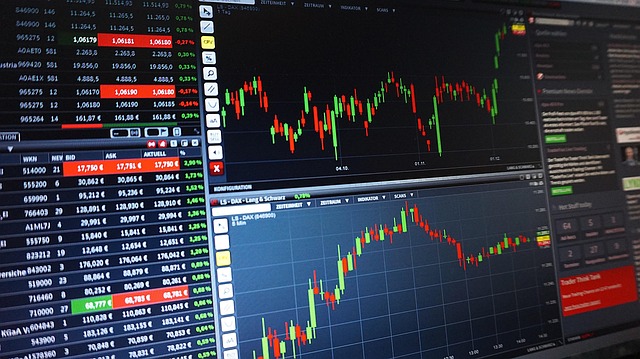
Annual Commissions and Full Trading Friction
For each candidate, build L = E + Σ(B + S + O) + T + D, with every component expressed as an annual percentage of invested assets. The components are: E, expense ratio; B, buy-side implementation shortfall; S, sell-side implementation shortfall; O, other transaction charges; T, realized tax drag; and D, tracking difference. Reconcile B and S to actual fills against the pre-trade decision benchmark, and record O from the trade record. That process keeps spread and market impact visible. Use fund-level data for E and D, and lot-level records for T. For completed cycles, sum the measured all-in costs of the cycles while leaving unmatched legs separately visible. The output is expected annual all-in drag, not a commission quote.
Do not fill gaps with optimistic assumptions. According to the supplied Yahoo Finance material, it provides no annual ETF trading volume, investor portfolio value, or turnover rate from which cost could be calculated. According to the Trading 212 snippet, it has no visible effective date or fee-schedule version, so it cannot verify the offer as a 2026 policy. Missing program data must remain an explicit uncertainty.
Fund eligibility is not approval of every trade. In a taxable account, calculate each lot’s gain or loss before execution, then compare tax due with the trade’s documented after-cost benefit. If tax due exceeds that benefit, reject the sale and rebuild the ledger without it. In a tax-advantaged account, enter no current tax charge but retain the other non-tax components; tax exemption does not erase trading frictions or tracking difference.
For any tactical trade that remains, require a documented gross expected benefit that exceeds all-in cost by a predefined margin. If the evidence cannot clear that margin, choose no trade and recalculate annual drag. The decision is strict: select the implementation with the lower complete observed annual cost among otherwise comparable choices. When fewer completed round trips produce that lower total, select the lower-turnover path or another lower-total-cost implementation.
The behavioral error is treating commission as the whole cost of trading while overlooking the spread embedded in execution prices. A salient commission-free display can therefore make an unnecessary buy-and-sell cycle appear beneficial. With no documented portfolio benefit here, calendar-driven liquidation is not justified by the commission-free label; the actionable control is to document that benefit before approving another complete cycle.
| Implementation | Trading activity | Annual all-in drag | Decision |
|---|---|---|---|
| Liquidate and repurchase repeatedly | Count completed sale-and-repurchase cycles and gross notional from records | Observed all-in drag from actual fills, fund expenses, transaction charges, taxes, and tracking difference | Compare with every otherwise-comparable lower-turnover or lower-cost choice |
| Hold without completing a sale-and-repurchase cycle | No completed sell-and-repurchase cycles | Selected fund's observed annual expense | Choose if it has the lower observed total cost |
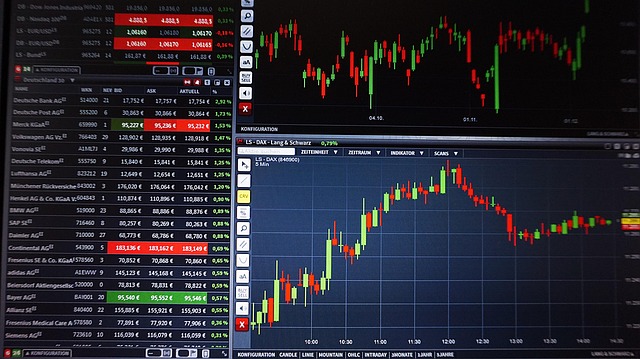
Decision Tree for Choosing ETF Volume
For otherwise comparable U.S. ETF implementations, the fund choice follows from completed exposure restorations, not ticket count. Count the program before evaluating any commission schedule, then express every noncommission cost in the same annual unit. That common unit defeats the interface error of treating a salient commission-free label as evidence that more trading is free.
Build an execution map for the annual program. Classify every execution as an initial purchase, partial rebalance, full liquidation, or repurchase. A round trip is the complete sale and restoration of the same exposure. An initial purchase or one-sided partial rebalance is not a completed round trip; a liquidation followed by repurchase of the same exposure is one. This prevents ticket count from masquerading as turnover.
For each candidate, build L = E + Σ(B + S + O) + T + D, with every component expressed as an annual percentage of invested assets. The components are: E, expense ratio; B, buy-side implementation shortfall; S, sell-side implementation shortfall; O, other transaction charges; T, realized tax drag; and D, tracking difference. Reconcile B and S to actual fills against the pre-trade decision benchmark, and record O from the trade record. That process keeps spread and market impact visible. Use fund-level data for E and D, and lot-level records for T. For completed cycles, sum the measured all-in costs of the cycles while leaving unmatched legs separately visible. The output is expected annual all-in drag, not a commission quote.
Do not fill gaps with optimistic assumptions. According to the supplied Yahoo Finance material, it provides no annual ETF trading volume, investor portfolio value, or turnover rate from which cost could be calculated. According to the Trading 212 snippet, it has no visible effective date or fee-schedule version, so it cannot verify the offer as a 2026 policy. Missing program data must remain an explicit uncertainty.
Fund eligibility is not approval of every trade. In a taxable account, calculate each lot’s gain or loss before execution, then compare tax due with the trade’s documented after-cost benefit. If tax due exceeds that benefit, reject the sale and rebuild the ledger without it. In a tax-advantaged account, enter no current tax charge but retain the other non-tax components; tax exemption does not erase trading frictions or tracking difference.
For any tactical trade that remains, require a documented gross expected benefit that exceeds all-in cost by a predefined margin. If the evidence cannot clear that margin, choose no trade and recalculate annual drag. The decision is strict: select the implementation with the lower complete observed annual cost among otherwise comparable choices. When fewer completed round trips produce that lower total, select the lower-turnover path or another lower-total-cost implementation.
| Gate | Test | Required decision | ||||||||
|---|---|---|---|---|---|---|---|---|---|---|
| Execution map | Any execution remains unclassified | Stop; count the annual program before fund selection | ||||||||
| Annual ledger | Observed total cost is lower than the alternatives | Keep the commission-free implementation eligible, subject to trade gates | ||||||||
| Annual ledger | Observed total cost is higher than the alternatives | Choose fewer completed round trips or the lower-total-cost implementation | ||||||||
| Taxable sale | Tax due exceeds documented after-cost benefit | Reject the sale and rebuild the ledger | ||||||||
Frequently Asked QuestionsIf an ETF trade shows $0 commission, can I assume a buy-and-sell round trip costs nothing? No; a commission-free ticket can still incur entry and exit half-spreads, market impact, a market-price-to-NAV difference, and applicable exchange, routing, ADR, stock-borrow, or other transaction charges. Can I rely on BMO's commission-free offer without checking the account terms? No; the supplied BMO excerpt omits eligibility, geography, effective date, and exceptions to the commission-free offer. Does a broker's best-interest duty mean a market order will be filled at the midpoint? No; a best-interest obligation is not a midpoint-fill guarantee, and order type and routing determine the realized price. Will rising industry-wide ETF volume erase my strategy's implementation shortfall? No; rising ETF volume may improve quote formation and lower unit execution costs, but it does not reduce the number or size of exposure changes made by an individual strategy. How should I estimate execution cost when I trim only part of an ETF position? Treat the trim as a fractional round-trip equivalent and scale the observed round-trip cost by the fraction traded. Is every taxable ETF sale automatically subject to a federal tax bill? No; tax is a realization term rather than a charge on market value, and gain, holding period, taxable income, and losses determine whether a taxable sale produces a federal bill. Quick answers
Also worth reading: Everything you need to know about Delta baggage fees and how to avoid paying for your bags: Everything you need to know · 7 Common ETF Tax-Loss Harvesting Mistakes to Avoid Before Year-End 2024: 7 Common ETF Tax-Loss Harvesting · 2026 ETF Rebalancing: Tax Bill vs. Strategy Trade-offs: 2026 ETF Rebalancing: Tax Bill Research Methodology & Editorial StandardsWe begin by defining the specific objectives the reader needs to accomplish. Primary product documentation and authoritative secondary sources are assembled into a verified research corpus; drafting occurs only after this foundation is in place. Every quantitative claim is subjected to dual-source verification. Any figure that cannot be independently corroborated is either qualified or omitted. Published · Last reviewed · Owned by the Cashcache editorial desk (About, Contact, Privacy). Related readingLatestRelated answers |