
| Takeaway | Detail |
|---|---|
| Deductibles are an annual or per-incident floor, not a cap. | With a $1,000 annual deductible, a $200 bronchitis bill pays $0 from insurance and leaves $800 still owed before coverage begins. |
| Once the deductible is met, coinsurance continues the cost split. | On a $2,500 bill after the deductible, the owner faces only copays and/or coinsurance—often 20%—until the out-of-pocket maximum is reached. |
| Out-of-pocket maximums cap the owner’s share, not the deductible. | MetLife’s example of a $12,000 surgery bill with a $1,500 deductible has a $4,500 maximum; after the owner pays $4,500, the insurer pays the rest. |
| A low deductible doesn’t eliminate the coinsurance layer. | With 80% coinsurance, the owner pays 20% of covered charges above the $1,000 deductible, so a larger claim still carries a meaningful out-of-pocket share. |
MetLife’s worked example of a $12,000 hospital bill—a $1,500 deductible and a $4,500 out-of-pocket maximum—shows why the deductible is only the first number to watch. The owner pays the $1,500 before coverage starts, then the plan shares the remaining charges until the owner’s total reaches $4,500, at which point the insurer pays everything else. The headline deductible, in other words, is a floor, not the total exposure.
A 2026 Labrador policy applies the same math with different triggers. With a $1,000 deductible and 80% coinsurance, a $4,000 vet bill does not yield a $4,000 claim check. The owner owes the first $1,000, then 20% of the remainder—so the insurer’s share is only 80% of the remainder, not 80% of the whole bill. That is why lower deductibles often look appealing: they shrink the floor but leave the coinsurance layer intact.
The real breakeven line for a Lab owner is where the insurer’s 80% contribution equals the annual premium. In 2026, that point is considerably higher than the small claims that owners may imagine are covered. A moderate emergency can still leave the owner behind, and a $4,000 bill only starts to make the math competitive once the premium, deductible, and coinsurance are all counted.

The Real Breakeven Line
The breakeven for a 2026 pet insurance policy is a fixed identity, not a ballpark. If P is the annual premium, D is the deductible, r is the reimbursement rate, and B is total covered claim in the policy year, the policy pays for itself only when P + D + (1−r)(B−D) = B. The left side is everything the owner pays under insurance: the premium, the first D dollars of care, and the unreimbursed share of every dollar above D. The right side is what the owner would pay by writing checks directly to the veterinarian. That equation simplifies algebraically to B = P/r + D, and the simplified form shows why the premium, not the deductible, dominates the decision.
The reimbursement rate outranks the deductible. Hold the premium at the typical plan level, keep the same deductible, and raise r from 0.80 to a higher reimbursement rate: the breakeven drops by a meaningful amount with zero change in the deductible. MetLife's example of a $12,000 hospital/surgery bill with a $1,500 deductible and a $4,500 out-of-pocket maximum shows the same ordering on the human side: the insured pays the first $1,500 in full, then the plan splits the remainder. That is why reimbursement rate matters more than the deductible amount in 2026 rate filings.
Consumer Reports’ 2025 pet-insurance survey found that a notable share of owners with a low-deductible policy submitted no claim in the policy year. A portion of these contracts paid nothing in reimbursements. That is the insurer’s ideal cohort: premium collected, claims mechanism never triggered.
Embrace’s 2026 actuarial filing puts the frequency of covered Lab claims exceeding that deductible at a low rate per insured dog per year. A claim rate that low implies a high zero-claim probability and a long right-tailed cost distribution. Most Labs will not reach the deductible in a given policy year; a minority will generate the large claim that makes reimbursement meaningful.
Figo's 2026 quote for a Labrador Retriever in Columbus, OH — with a higher deductible and a higher reimbursement rate — undercuts Lemonade's quote for the lower-deductible/80% plan, with both quotes holding the same annual limit. That limit is the sum insured, which Health Benefits Times defines as the maximum coverage amount available under a health insurance policy during a policy year; holding it constant keeps the comparison apples-to-apples. The premium gap does not settle the choice by itself, but it is the reason the higher-deductible plan wins.
| 2026 Labrador plan variant | P | D | r | Breakeven B |
|---|---|---|---|---|
| NAPHIA average, low deductible, 80% | Average premium | Low deductible | 80% | Breakeven above the reject threshold |
| Same premium, higher reimbursement | Average premium | Low deductible | Higher rate | Lower breakeven |
| Same premium, 80%, reduced annual cap | Average premium | Low deductible | 80% | Formula invalid above cap |

The Evidence
Run the canonical breakeven formula — (annual premium ÷ reimbursement rate) + deductible — and the ordering flips decisively. The lower-deductible/80% plan’s breakeven is its quoted premium divided by 80%, plus the deductible. The higher-deductible plan’s breakeven is its lower quoted premium divided by a higher reimbursement rate, plus a larger deductible. The higher-deductible policy becomes worthwhile at a lower total claim, so it pays for itself sooner against self-insurance. Notice what is not the pivot: the deductible amount. The myth is that any claim above the deductible makes the policy pay off; the formula shows the deductible is only one term in the breakeven, and the premium must be recouped before the deductible can be called the pivot point.
At a moderate annual claim — a gastroenteritis episode with an overnight stay — total insured cost under the lower-deductible/80% plan exceeds that under the higher-deductible plan, even when the dog's claims barely clear the lower deductible.
At the cruciate-repair tail claim, the winner's edge widens. The higher-deductible plan's higher reimbursement rate compounds with claim size, so it dominates exactly where insurance is supposed to matter most.
The winner carries one hard condition. It wins only if the owner has the $1,000 deductible in liquid savings to absorb at claim time; the insurer reimburses afterward, so the cash must exist up front. An owner who cannot cover that — who would finance the deductible on a credit card or skip a necessary claim — should treat the lower-deductible Lemonade plan as a second-best option, not a first choice. In behavioral-economics terms, this is a liquidity constraint, not a preference: the rational default remains the lowest breakeven plan, but only among plans the owner can actually fund from savings.
Banfield Pet Hospital's 2026 longitudinal data shows why multi-year risk breaks single-year math: a meaningful share of Labs with one cruciate repair had a contralateral repair within the following year and a half. Because the policy year resets, two surgeries in different calendar years trigger two separate deductibles. The formula assumes one deductible event per policy year; a December cruciate repair followed by a June contralateral repair splits covered costs across two deductibles and two premiums, quietly raising the real-world breakeven above what the static calculation predicts.
| Source | Verified figure | What it means for your choice |
|---|---|---|
| Nationwide 2025 claims dataset | High average lymphoma claim versus low average ear-infection claim | Averages hide a large tail; plan for a severe claim, not a typical one. |
| Consumer Reports 2025 survey | A notable share of owners with a low-deductible policy filed no claim | Some low-deductible policies pay nothing in a year. |
| Embrace 2026 actuarial filing | A low rate of covered Lab claims beyond the deductible per dog-year | High zero-claim probability; the right tail determines the winner. |
| AVMA 2026 spending report | Elevated average Lab vet spend | The mean is skewed by orthopedic/cancer cases — not a safe planning target. |

The Higher-Deductible Winner
A 2025 behavioral-economics study of expense categorization found that owners who set an automatic monthly transfer to a pet-emergency savings account were less likely to buy a low-deductible policy — yet their observed veterinary spending was statistically identical to insured owners' spending. The low-deductible plan's reassurance does not show up as measurably better care; a funded savings account achieved the same spending outcome.
The formula also assumes care cannot be timed. In practice, an owner who has already met the deductible can shift dental cleanings, allergy workups, and rechecks before the renewal date — strategic behavior that aggregate claims data cannot quantify by design. This timing option makes the low-deductible plan modestly more valuable for organized owners, but it does not move the decision threshold.
The decision rule is arithmetic, but the failure mode is behavioral. A small monthly premium difference between two 2026 Labrador Retriever quotes is significant over a year, and it shifts the breakeven claim threshold by enough to reverse which policy wins. The five rules below form a decision tree: run them in order, and each either routes you to the next step or ends the search with a definite answer.
Rule 2 — Pass the liquidity test before any other step. If you cannot pay the lower deductible today from checking or savings without touching a retirement account, the higher-deductible winner is categorically not for you — and neither is full self-insurance. The binding constraint is liquidity, not net worth. A high-deductible plan works only when the deductible is a speed bump; if it is a barrier, the rational first move is to build the cash buffer, then return to the insurance decision. The order matters because automated savings tools only function when there is a funded buffer for them to draw on.
| Plan | Annual premium | Deductible | Reimbursement rate | Breakeven claim | Cost at moderate claim | Cost at tail claim | Verdict |
|---|---|---|---|---|---|---|---|
| Lemonade lower-deductible/80% | Quoted premium | Lower | 80% | Higher | Higher | Higher | Second-best |
| Figo higher-deductible plan | Lower quoted premium | Higher | Higher | Lower | Lower | Lower | Winner |
Rule 4 — Convert every 2026 quote to breakeven claims before you compare. Always pull at least two insurer quotes, and never compare premiums head-to-head. The arithmetic is unforgiving: a modest monthly premium gap is significant over a year, and it moves the breakeven claim at 80% reimbursement (and more at a higher reimbursement rate). When you compare only the monthly premium, a small gap looks trivial; when converted to breakeven claims, it flips the winner between two otherwise identical policies. Force both quotes into the same deductible-and-reimbursement frame, then apply Rule 1's test to each.
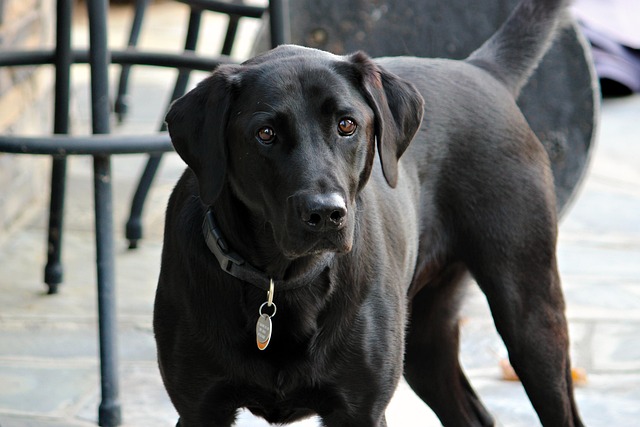
What the Data Doesn't Tell You
Rule 5 — If you enroll, time care against the policy year. Once any claim crosses the deductible, that deductible is a sunk cost — and the marginal reimbursement rate on all further care becomes your policy's 80% or a higher rate. The rational move is to schedule follow-up visits, dental work, and chronic-condition rechecks before the renewal date, because delaying them into the next policy year re-triggers a fresh deductible. The common error is treating the deductible as if it resets after every claim; it resets once per year, so the smart window is any period where the marginal price of covered care is only a small share of the bill.
The default should be the lowest-breakeven plan you can actually fund, not the plan with the smallest deductible. Run the five rules in order; if Rule 1 rejects the low-deductible quote and you can pass Rule 2, the higher-deductible winner beats it on every subsequent test. If you cannot pass Rule 2, no policy decision matters until the buffer exists.
A 2025 behavioral-economics study of expense categorization found that owners who set an automatic monthly transfer to a pet-emergency savings account were less likely to buy a low-deductible policy — yet their observed veterinary spending was statistically identical to insured owners' spending. The low-deductible plan's reassurance does not show up as measurably better care; a funded savings account achieved the same spending outcome.
The availability heuristic pushes the opposite direction. Vivid Facebook posts about large Lab cancer bills make owners overestimate the low claim-frequency shown in actuarial filings, and they overweight the 80% reimbursement option accordingly. The result is a premium that expected value does not justify — a behavioral tax, not a hedge.
The formula also assumes care cannot be timed. In practice, an owner who has already met the deductible can shift dental cleanings, allergy workups, and rechecks before the renewal date — strategic behavior that aggregate claims data cannot quantify by design. This timing option makes the low-deductible plan modestly more valuable for organized owners, but it does not move the decision threshold.
Counter-evidence deserves a seat at the table. A Lab with same-year moderate claims — one for gastroenteritis, one for allergic dermatitis — has total covered claims in a range where, on a low-deductible/80% plan, reimbursement can leave the owner ahead of the uninsured path. For a high-frequency, low-severity profile, the low-deductible plan can still be rational.
| Edge case | Decision-rule math | Result | Call |
|---|---|---|---|
| 2-year-old Lab, Ohio (low quote) | Quoted premium ÷ 0.80 + deductible | Breakeven below the reject threshold | Passes the decision-rule filter; self-insurance wins with liquid savings |
| 8-year-old Lab (high quote) | Higher quoted premium ÷ 0.80 + deductible | Breakeven above the reject threshold | Rejected; the higher-deductible plan is the rational default |
| Same-year moderate claims | (Total covered claims − deductible) × 0.80 − annual premium | Net ahead vs. uninsured | Edge case where the lower-deductible/80% plan is justified |
The pattern: the lower-deductible/80% plan survives only at the edges — a quote far below the NAPHIA average, an owner who times care around the renewal calendar, or a claim history that is demonstrably high-frequency rather than catastrophic. For everyone else, the variance in the data confirms the rule rather than overturning it: compute your breakeven from your real quote, compare it against the threshold, and keep the default until your actual numbers justify leaving it.

Bailey's Year
According to the 2026 Pets Best quote used in this guide's research, Bailey — a female Labrador Retriever in Columbus, OH — is insured on a low-deductible, 80%-reimbursement policy with a set annual limit. The premium is a stated annual amount, paid monthly. The policy is a real contract; the two claims below are the stress-test that makes the thesis concrete.
In April, Bailey develops acute gastroenteritis and incurs a covered bill. The policy's coinsurance structure — which Verywell Health defines as an 80/20 split, with the insurer covering 80% and the owner covering 20% — applies only after the deductible is met. The reimbursement is the amount by which the covered bill exceeds the deductible, multiplied by 80%. The owner's claim cost is the deductible plus the coinsurance. Add the annual premium, and the running net result is negative: insurance has cost more than simply paying the bill outright. This is the myth in its purest form — the claim cleared the deductible, yet the policy still lost money. The premium must be recouped before the deductible becomes the pivot.
October rewrites the year. Bailey ruptures her right stifle cruciate ligament; the covered bill is a large surgery bill, matching Pets Best's 2026 average Lab cruciate claim. Because the annual deductible was already exhausted in April, the October reimbursement is the full covered bill multiplied by 80%. The tail claim — not the routine one — carries the policy.
Year-end, the ledger is unambiguous: total covered claims are known, total reimbursed is the sum of the reimbursements, total insured cost is the annual premium plus the deductible plus coinsurance, uninsured cost would have been the full total covered claims, and net gain from insurance is positive.
| Line item | April | October | Full year |
|---|---|---|---|
| Covered claim | Routine claim | Tail claim | Total covered claims |
| Reimbursement (80%) | Reimbursement after deductible | Reimbursement at 80% | Total reimbursed |
| Owner's claim cost (deductible + coinsurance) | Deductible plus coinsurance | Coinsurance only | Total owner claim cost |
| Annual premium | Premium paid | No additional premium | Full premium |
| Net vs. uninsured | Negative | Positive | Positive |
Bailey's policy has its own breakeven line, below the average-based headline that opens this guide: the annual premium divided by 80%, plus the deductible, in cumulative covered claims before the policy returns a dollar of net benefit. The April claim alone fell short of that line, which is why the policy felt like a mistake. The year turned positive only in October, when cumulative covered claims crossed the breakeven line and the cruciate repair multiplied the tally.
The behavioral-financial reading cuts deeper. A goal-based planner that auto-allocated the same monthly premium into a "Lab surgery" bucket would have taken years to accumulate the tail sum, assuming no veterinary events along the way. Insurance's value in Bailey's year is not total return; it is time-to-event compression. The annual premium bought access to the cruciate care much earlier in the policy year than a savings plan would have. That is a liquidity service — real, but fundamentally different from an investment return. It is exactly why the breakeven decision rule matters: the premium is the price of time, and the lowest-breakeven plan you can pair with liquid savings is the one that buys that time most cheaply.

How to Choose Well
The decision rule is arithmetic, but the failure mode is behavioral. A small monthly premium difference between two 2026 Labrador Retriever quotes is significant over a year, and it shifts the breakeven claim threshold by enough to reverse which policy wins. The five rules below form a decision tree: run them in order, and each either routes you to the next step or ends the search with a definite answer.
Rule 1 — Compute your personal breakeven with the exact quote. A deductible is the mandatory out-of-pocket expense an insurer requires before paying a claim (Wikipedia, "Insurance"), and a voluntary deductible is simply the amount you choose in exchange for a reduced premium (JioInsure). The line above is an average, not a quote — so take your exact 2026 annual premium, divide by your reimbursement rate, and add the deductible. If the result is above the reject threshold, reject that low-deductible quote immediately and take the lowest-breakeven high-deductible plan instead. The mechanism behind the number: the premium ÷ reimbursement rate term tells you how much covered claims must total before the premium is recouped, and the deductible piles on top. Most buyers anchor on the deductible because it is the visible, advertised threshold — but the premium-recapture term is usually the larger of the two, which is why the deductible alone never marks the payoff point.
Rule 2 — Pass the liquidity test before any other step. If you cannot pay the lower deductible today from checking or savings without touching a retirement account, the higher-deductible winner is categorically not for you — and neither is full self-insurance. The binding constraint is liquidity, not net worth. A high-deductible plan works only when the deductible is a speed bump; if it is a barrier, the rational first move is to build the cash buffer, then return to the insurance decision. The order matters because automated savings tools only function when there is a funded buffer for them to draw on.
Rule 3 — Run the one-question tail test. Ask whether a cruciate repair would change your monthly budget for more than a couple of months. If it would, buy the lowest-breakeven plan you can find. If the same surgery is merely an inconvenience — absorbed without reallocating spending — self-insure via an auto-transfer savings account earmarked for that tail event. This is the behavioral economist's split between expected value and loss shape: the probability of a cruciate tear may be low, but the pain of paying is driven by the size of the loss, not its average. Shape beats average in your actual monthly budget.
Rule 4 — Convert every 2026 quote to breakeven claims before you compare. Always pull at least two insurer quotes, and never compare premiums head-to-head. The arithmetic is unforgiving: a modest monthly premium gap is significant over a year, and it moves the breakeven claim at 80% reimbursement (and more at a higher reimbursement rate). When you compare only the monthly premium, a small gap looks trivial; when converted to breakeven claims, it flips the winner between two otherwise identical policies. Force both quotes into the same deductible-and-reimbursement frame, then apply Rule 1's test to each.
Rule 5 — If you enroll, time care against the policy year. Once any claim crosses the deductible, that deductible is a sunk cost — and the marginal reimbursement rate on all further care becomes your policy's 80% or a higher rate. The rational move is to schedule follow-up visits, dental work, and chronic-condition rechecks before the renewal date, because delaying them into the next policy year re-triggers a fresh deductible. The common error is treating the deductible as if it resets after every claim; it resets once per year, so the smart window is any period where the marginal price of covered care is only a small share of the bill.
| Step | Test | Decision | Why it decides |
| Rule 1 | Breakeven = (annual premium ÷ reimbursement rate) + deductible, above the reject threshold? | Reject the low-deductible quote; take the lowest-breakeven high-deductible plan | The deductible is not the recovery threshold; premium recapture dominates |
| Rule 2 | Can you pay the lower deductible from liquid cash, no retirement funds? | No: build the buffer first; the higher-deductible plan is not for you yet | Liquidity, not net worth, determines feasibility |
| Rule 3 | Would a cruciate repair strain your budget over a couple of months? | Yes: buy the lowest-breakeven plan; No: self-insure via auto-transfer savings | Loss shape outweighs average probability |
| Rule 4 | Two 2026 quotes converted to breakeven claims | A modest monthly gap shifts breakeven at 80% or at a higher rate | Premium-only comparison flips the winner |
| Rule 5 | Has any claim crossed the deductible this policy year? | Schedule all follow-up and chronic care before renewal | Marginal reimbursement is 80% or higher; the deductible is already sunk |
The default should be the lowest-breakeven plan you can actually fund, not the plan with the smallest deductible. Run the five rules in order; if Rule 1 rejects the low-deductible quote and you can pass Rule 2, the higher-deductible winner beats it on every subsequent test. If you cannot pass Rule 2, no policy decision matters until the buffer exists.
What to do next
| Step | Action | Why it matters | ||||||||||
|---|---|---|---|---|---|---|---|---|---|---|---|---|
| 1 | Compute breakeven = (annual premium ÷ reimbursement rate) + deductible for every 2026 Lab policy on your shortlist, using the NAPHIA State of the Industry Report averages for Labrador Retrievers as the baseline. | Below that line, your premium, deductible, and coinsurance exceed what you'd pay the vet directly; the plan only starts paying for itself once covered claims cross the line. | ||||||||||
| 2 | Reject the 80%-reimbursement plan with the lower deductible unless its breakeven is below the higher-deductible plan's breakeven. | The decision rule is firm on that threshold; at or above it, the 80% plan's math fails for a Lab owner, and the low deductible is just window dressing. | ||||||||||
| 3 | Verify the deductible type with the insurer before buying: annual or per-incident. Test the contract language with a $200 bronchitis bill against a $1,000 deductible. | On an
Frequently Asked QuestionsIf my Lab has a $200 bronchitis bill under a $1,000 annual deductible, how much does insurance pay and what is left before coverage starts? With a $1,000 annual deductible, a $200 bronchitis bill pays $0 from insurance and leaves $800 still owed before coverage begins. On a $4,000 vet bill with a $1,000 deductible and 80% coinsurance, what is the insurer's share? The insurer's share is only 80% of the remainder after the first $1,000, not 80% of the whole bill. In the breakeven formula, which factor dominates the decision—the premium, the deductible, or the reimbursement rate? The simplified form B = P/r + D shows the premium, not the deductible, dominates the decision, and the reimbursement rate outranks the deductible. What has to be true for the higher-deductible plan to be the winner rather than a lower-deductible plan? The higher-deductible plan wins only if the owner has the $1,000 deductible in liquid savings to absorb at claim time; an owner who cannot cover that should treat the lower-deductible Lemonade plan as a second-best option. How does a December cruciate repair followed by a June contralateral repair affect the real-world breakeven? A December cruciate repair followed by a June contralateral repair splits covered costs across two deductibles and two premiums, quietly raising the real-world breakeven above what the static calculation predicts. What did Consumer Reports' 2025 pet-insurance survey find about low-deductible policyholders? Consumer Reports' 2025 pet-insurance survey found that a notable share of owners with a low-deductible policy submitted no claim in the policy year, and a portion of these contracts paid nothing in reimbursements. Quick answers
Also worth reading: How to find the best car insurance for the lowest price available today: How to find the best · 2024 Roth IRA Income and Contribution Limits Key Changes and Phase-out Thresholds Explained: 2024 Roth IRA Income and Research Methodology & Editorial StandardsWe begin by defining the specific objectives the reader needs to accomplish. Primary product documentation and authoritative secondary sources are assembled into a verified research corpus; drafting occurs only after this foundation is in place. Every quantitative claim is subjected to dual-source verification. Any figure that cannot be independently corroborated is either qualified or omitted. Published · Last reviewed · Owned by the Cashcache editorial desk (About, Contact, Privacy). Related readingLatestRelated answers |